In terms of inter-state relations, the Constitution provides for the following: Inter-state water dispute resolution; Inter-state councils for coordination
Amending the Indian Constitution is the process of changing the nation's fundamental law or supreme law. The procedure for amending the constitution is outlined in Part XX (Article 368) of the Indian Constitution.
Directive Principles of State Policy are instructions/guidelines to both the federal and state governments. Though these principles are not legally enforceable, they are critical to the country's governance.
Like the President, the vice president is chosen by the people through an indirect process. The US Vice-President serves as the inspiration for the position of vice-president in India.
The President of India is both the country's head of state and its first citizen. There shall be a President of India, according to "Article 52" of the Indian Constitution.
Fundamental Rights are the fundamental human rights of all citizens. These rights, as defined in Part III of the Constitution, are guaranteed to all people without distinction.
The Fundamental Duties are an essential part of the Indian Constitution. Some of the highest ideals preached by our great saints, philosophers, social reformers, and political leaders are embodied in the duties prescribed.
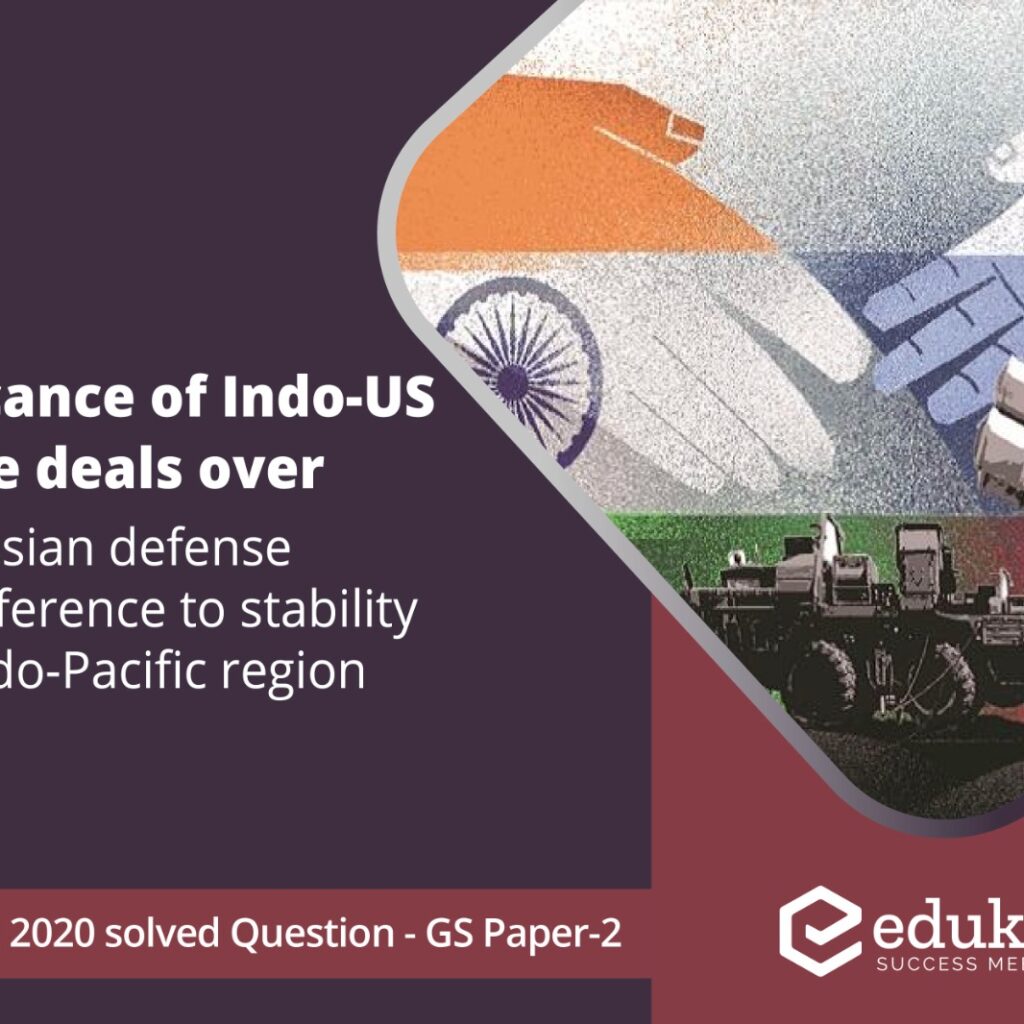
The Indo-US defense deals have assumed unprecedented significance in recent years, marking a paradigm shift from traditional Indo-Russian defense collaborations.