

Contents
- 1 Global Ocean Temperature Patterns
- 2 Global Warming and Ocean Amplification
- 2.0.1 1. Ocean Warming and the Thermal Lag
- 2.0.2 2. The Paris Agreement and the Pre-Industrial Baseline
- 2.0.3 3. Acceleration of Ocean Warming
- 2.0.4 4. Arctic Amplification
- 2.0.5 5. The “Black Water” Effect
- 2.0.6 6. Gulf of Mexico as a Regional Warming Hotspot
- 2.0.7 7. Bay of Bengal and Marine Heatwaves
- 2.0.8 8. Why Bay of Bengal Warming Matters for India
- 2.0.9 9. Marine Heatwaves and Ecosystem Impacts
- 3 Consequences of Ocean Warming
- 3.0.1 1. Thermal Expansion and Sea-Level Rise
- 3.0.2 2. Warming and Cryospheric Melting
- 3.0.3 Larsen Ice Shelf and Ice-Shelf Instability
- 3.0.4 3. Ocean Warming and Deoxygenation
- 3.0.5 4. Formation of Marine “Biological Deserts”
- 3.0.6 5. Coral Bleaching
- 3.0.7 6. Changes in the Atlantic Meridional Overturning Circulation
- 3.0.8 7. Wider Atmospheric and Weather Consequences
- 3.0.9 In case you still have doubts, contact us on 9773890604
Global Ocean Temperature Patterns
Before revising the distribution of ocean temperature, NCERT Class 11, Fundamentals of Physical Geography should be referred to for the basic conceptual framework. The NCERT treatment provides the foundational understanding of how ocean temperature varies horizontally across latitudes and vertically with depth. Use the relevant NCERT figures alongside these points for visual recall.
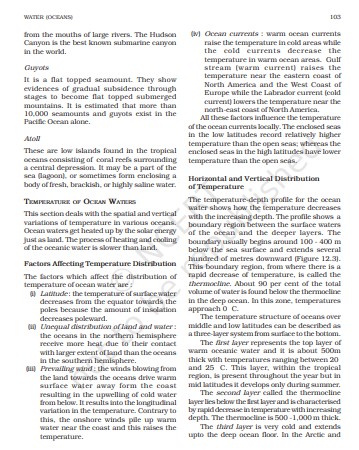
1. Horizontal Distribution
Ocean temperature generally decreases from the Equator towards the Poles, primarily because the intensity of solar heating decreases with increasing latitude.
- Average surface temperature: Around 26.7°C, with regional variations.
- Hemispheric contrast: The Northern Hemisphere (~19°C) is warmer than the Southern Hemisphere (~16°C) because the Northern Hemisphere has a greater proportion of land, whereas the Southern Hemisphere is dominated by oceans.
- Latitudinal trend: Temperature broadly decreases by about 0.5°C for every 1° increase in latitude
- At 40° latitude: Approximately 14°C.
- Towards the Poles: Temperature approaches 0°C.
Equatorial anomaly: The highest ocean temperatures are not exactly at the Equator but around 5°–6°N. Greater cloudiness and strong convection near the Equator reduce the amount of solar radiation reaching the ocean surface.
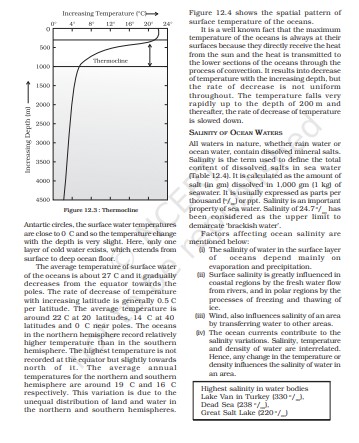
2. Vertical Distribution
With increasing depth, ocean temperature broadly develops into three layers:
- Surface Layer: The warmest layer, directly influenced by solar heating and surface mixing.
- Thermocline: The transition zone where temperature decreases rapidly with depth.
- Deep Layer: Cold and relatively uniform, generally around 3–4°C.
The thermocline is therefore the most important feature of the vertical temperature profile, separating the relatively warm surface waters from the cold deep waters.
Global Warming and Ocean Amplification
The discussion of ocean temperature becomes particularly important when placed in the context of anthropogenic climate change. The ocean is not merely a passive recipient of atmospheric warming; it absorbs and stores a substantial amount of excess heat and responds to warming on a different timescale from the atmosphere. This difference in thermal response helps explain why changes in ocean temperature, Arctic conditions and regional marine heatwaves have become increasingly important indicators of climate change.
1. Ocean Warming and the Thermal Lag
The atmosphere and ocean do not respond to increasing greenhouse-gas concentrations at the same rate. The atmosphere can respond relatively quickly to changes in radiative forcing, whereas the ocean warms more slowly because water has a high specific heat capacity and can store enormous quantities of thermal energy. Observable and sustained increases in ocean heat content became particularly evident from around the 1970s, coinciding with the period of rapid intensification of anthropogenic warming. This creates an important distinction when studying climate data. Different datasets and indicators may use different historical reference periods depending on what is being measured. Atmospheric temperature records often examine changes over the industrial era, while systematic observations of ocean heat have become especially valuable from the latter half of the twentieth century as measurement systems improved. The important conceptual point is that the ocean has a thermal memory. It takes considerable energy and time to change the temperature of such a massive body of water, but once heat is absorbed, it can remain stored and subsequently influence ocean circulation, sea-level rise, ecosystems and atmospheric conditions.
2. The Paris Agreement and the Pre-Industrial Baseline
The significance of ocean warming becomes clearer in the context of the Paris Agreement, whose temperature goals seek to hold the increase in global average temperature to well below 2°C above pre-industrial levels while pursuing efforts to limit it to 1.5°C. A critical issue here is the meaning of “pre-industrial”. The term does not correspond to one universally designated calendar year. Climate science commonly uses historical periods as practical reference baselines, while the political discussion around responsibility involves a much broader question: from when should anthropogenic warming be counted? This matters because the choice of baseline affects how cumulative warming and historical responsibility are interpreted. Developed countries and developing countries have historically approached the issue differently, particularly because industrialisation occurred at different times and because colonial histories influenced the distribution of economic benefits and environmental costs. For climate policy, therefore, the baseline is not merely a technical statistical question. It also intersects with debates over:
- Historical responsibility
- Climate justice
- Common but differentiated responsibilities
- Developmental rights
- Equitable burden-sharing
The broader lesson is that climate data must be understood alongside the political and historical context in which climate targets are negotiated.
3. Acceleration of Ocean Warming
The most important concern is not merely that the oceans are warming, but that the rate at which they are accumulating heat has increased over time. The rate of warming has not remained constant throughout the modern period. Earlier decades experienced comparatively slower warming, while the twenty-first century has witnessed substantially greater ocean heat accumulation. The approximate figures used for conceptual understanding are:
| Period | Approximate Warming Rate | Interpretation |
| 1980s–1990s | ~0.05°C per decade | Relatively slower warming |
| 21st century | >0.3°C per decade | Much faster warming |
| Arctic example | ~1.2°C per decade | About four times the global rate |
These values should not be treated as a single uniform rate for the entire global ocean because warming varies according to region, depth, season and the period being analysed. The larger geographical principle is more important: Ocean warming is spatially uneven and its rate has accelerated significantly in recent decades. This uneven warming produces regional hotspots, where the consequences can be much more severe than the global average suggests.
4. Arctic Amplification
One of the most striking examples of regional amplification occurs in the Arctic. The Arctic is warming much faster than the global average, a phenomenon known as Arctic amplification. One of the most important mechanisms behind this amplification is the ice–albedo feedback. What is Albedo? Albedo refers to the proportion of incoming solar radiation reflected by a surface. 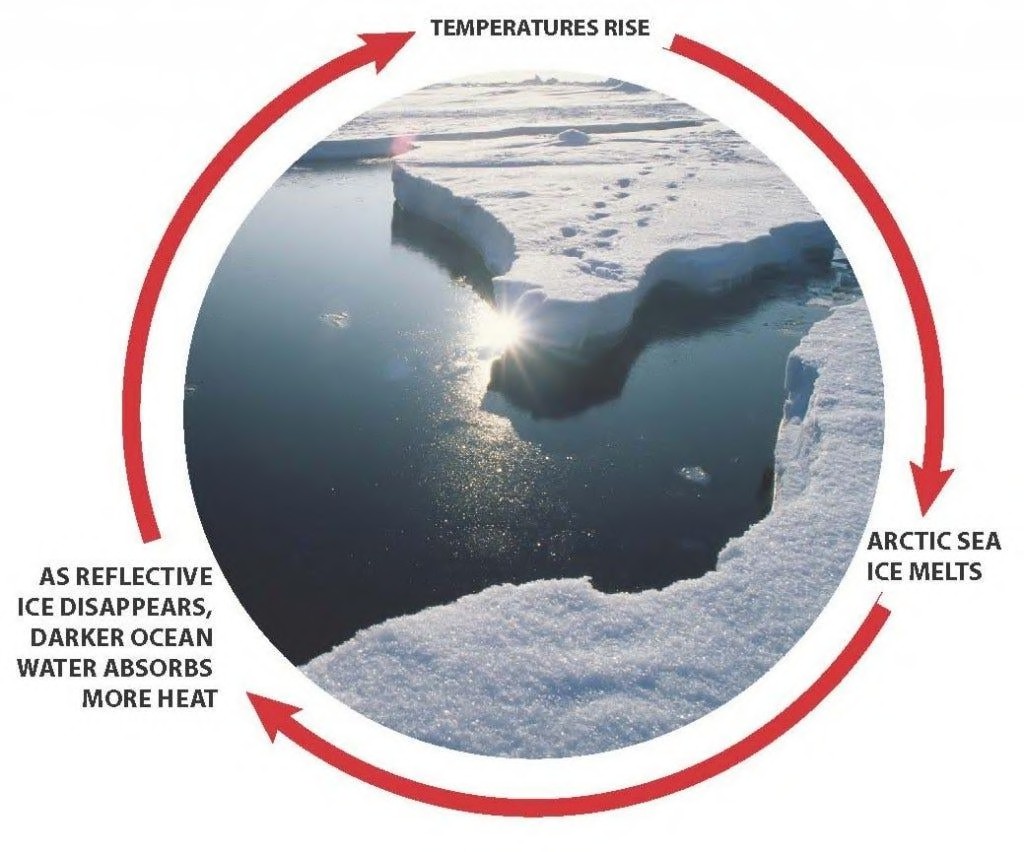
Snow and ice have a high albedo. They reflect a large proportion of incoming solar radiation back into space. Open ocean water, by contrast, is much darker and absorbs a considerably greater proportion of incoming solar energy. Therefore, when Arctic sea ice melts
, the surface changes from a highly reflective one to a much more strongly absorbing one. The process creates a positive feedback loop: Ice and snow melt → Albedo decreases → More solar energy is absorbed → Surface warms further → More ice melts
5. The “Black Water” Effect
The contrast can be visualised as white ice versus dark or “black” ocean water. When the Arctic is covered by ice and snow, much of the incoming solar radiation is reflected. Once the ice disappears, the exposed ocean surface absorbs much more energy. The precise albedo values vary according to the type and condition of the surface, solar angle, snow cover and other factors. Therefore, values such as 95% reflection by ice versus less than 20% by dark water should be treated as illustrative rather than universal constants. The mechanism, however, is fundamental: A darker, ice-free ocean surface absorbs more solar energy, which reinforces Arctic warming and accelerates further ice loss. This explains why the Arctic can experience amplified warming rather than merely the global average rate of warming.
6. Gulf of Mexico as a Regional Warming Hotspot
The Gulf of Mexico provides another example of regional ocean warming. It is a relatively enclosed marginal sea with strong interactions between ocean circulation and the atmosphere. Changes in its temperature can therefore influence both marine conditions and atmospheric processes. The warming rate of the Gulf of Mexico has increased substantially, with the rate described in the study material as having approximately doubled over the last five decades. Warmer waters in the Gulf can influence:
- Marine ecosystems
- Evaporation
- Atmospheric moisture
- Tropical cyclone development
- Coastal flooding
- Ocean stratification
The Gulf therefore demonstrates an important principle: regional ocean warming can have consequences that extend well beyond the ocean itself.
7. Bay of Bengal and Marine Heatwaves
The bay of Bengal represents another major reason of concern because of its combination of rapidly warming, water, marine heat, extreme and exceptionally high cost, one vulnerability.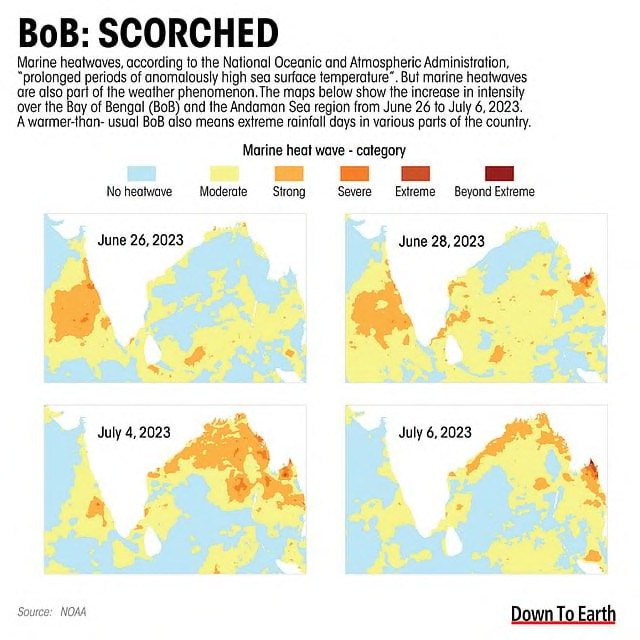
What is marine heat wave?
A marine heat wave is a prolonged period during which sea surface temperature, usually high relative to the normal conditions for that particular location and season
A commonly used statistical definition identifies temperatures above the 90th percentile of the local climatological baseline for at least several consecutive days.
Therefore, a marine heatwave is not simply “hot water.” It is abnormally warm water persisting for an unusually long period relative to the region’s normal temperature conditions.
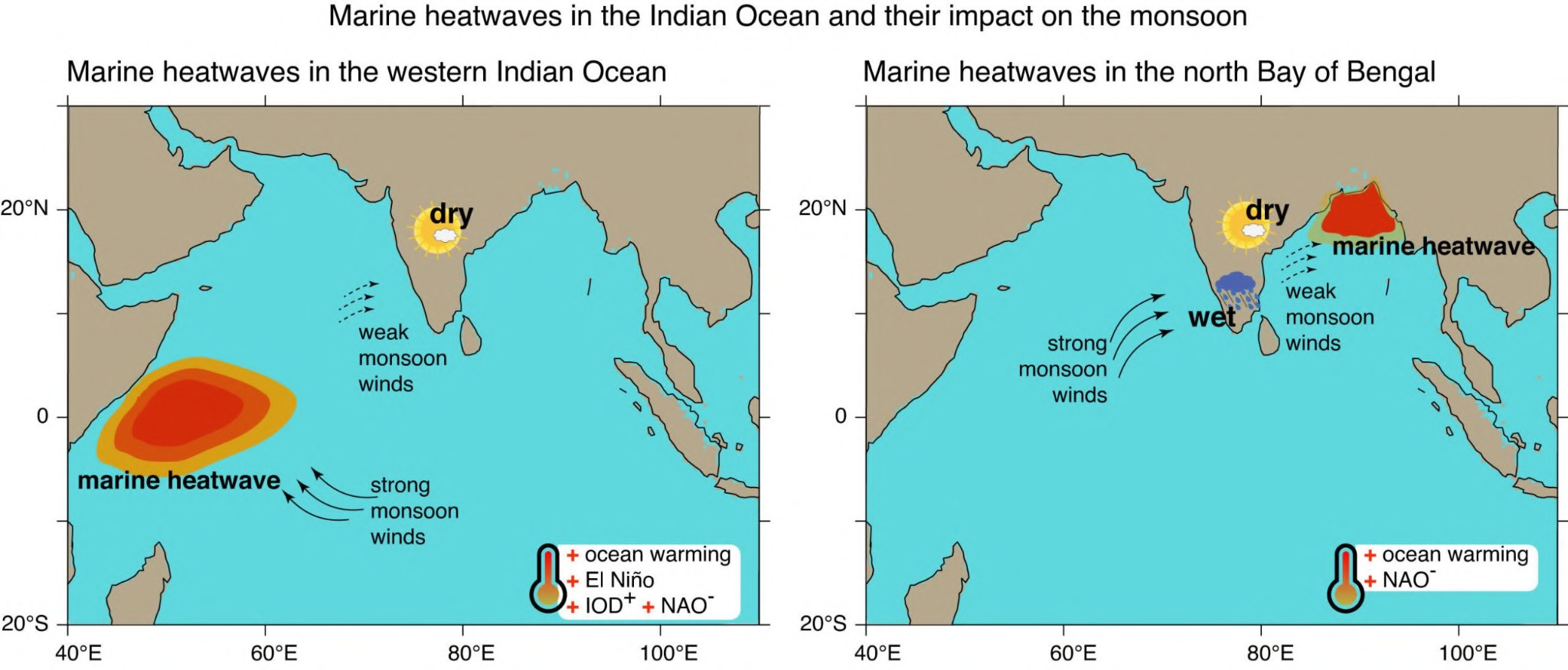
The Bay of Bengal has experienced increasingly persistent periods of extreme marine heat. The approximate temperatures discussed for the region illustrate the scale of recent warming, with historical surface temperatures around 26.7–27°C in relevant periods and extreme contemporary conditions reaching 30–33°C in some locations and seasons. These figures vary according to location, season and measurement period, but the broader trend is significant: the Bay of Bengal is becoming increasingly vulnerable to prolonged marine heat extremes.
8. Why Bay of Bengal Warming Matters for India
The importance of the Bay of Bengal lies not merely in its oceanographic characteristics but in the population and economic systems surrounding it. The northern Indian Ocean is bordered by countries including:
- India
- Bangladesh
- Myanmar
- Thailand
- Pakistan
- Sri Lanka
Large populations depend directly or indirectly on the ocean for fisheries, agriculture, ports, tourism, transport and coastal livelihoods. India’s vulnerability is particularly significant because a substantial share of its population and economic infrastructure is concentrated in or near coastal regions. Major cities such as Kolkata, Mumbai and Chennai are connected to the sea through ports, industries, transport networks and dense urban settlements. Consequently:
Ocean warming + Sea-level rise + Cyclones + Storm surges + Coastal erosion + Coastal urbanisation can produce compound risks.
The issue is therefore not simply whether the ocean becomes warmer. The critical question is how warming interacts with existing geographical vulnerabilities.
9. Marine Heatwaves and Ecosystem Impacts
Persistent marine heatwaves can push marine organisms beyond their normal thermal limits. Species may respond by:
- Migrating towards cooler waters
- Experiencing physiological stress
- Changing feeding behaviour
- Altering reproductive cycles
- Facing increased mortality
Coral ecosystems are particularly vulnerable. Prolonged thermal stress can cause coral bleaching, in which corals lose or expel their symbiotic algae. Severe or prolonged bleaching can result in coral mortality. Marine heatwaves can also alter fish distribution and fisheries productivity, affecting communities that depend upon marine resources. Thus, marine heatwaves represent a connection between: Ocean temperature → Marine ecosystems → Fisheries → Coastal livelihoods
Consequences of Ocean Warming
The warming of the ocean has consequences that extend far beyond a rise in sea-surface temperature. Because the ocean interacts continuously with the cryosphere, atmosphere, marine ecosystems and global circulation, additional heat stored in the ocean can trigger a chain of physical and biological changes. Some effects are relatively immediate, such as thermal expansion and ice-sheet melt, while others develop progressively through changes in oxygen availability, marine ecosystems and ocean circulation.
1. Thermal Expansion and Sea-Level Rise
One of the most direct consequences of ocean warming is thermal expansion. As seawater warms, its molecules become more energetic and occupy slightly more volume. Therefore, even without adding any additional water to the ocean, warming can cause the volume of seawater to increase, contributing to global sea-level rise. This is important because sea-level rise has two major components: Warming of seawater → Thermal expansion and Warming of climate → Melting of glaciers and ice sheets → Additional water enters the ocean Thermal expansion is therefore a physical consequence of ocean warming, while melting land-based ice represents an additional source of sea-level rise. Thermal expansion is also relatively more reversible than permanent loss of land ice: if ocean water eventually cools, some of the expansion can diminish. However, because the ocean responds slowly, the effects of accumulated heat can persist for long periods.
2. Warming and Cryospheric Melting
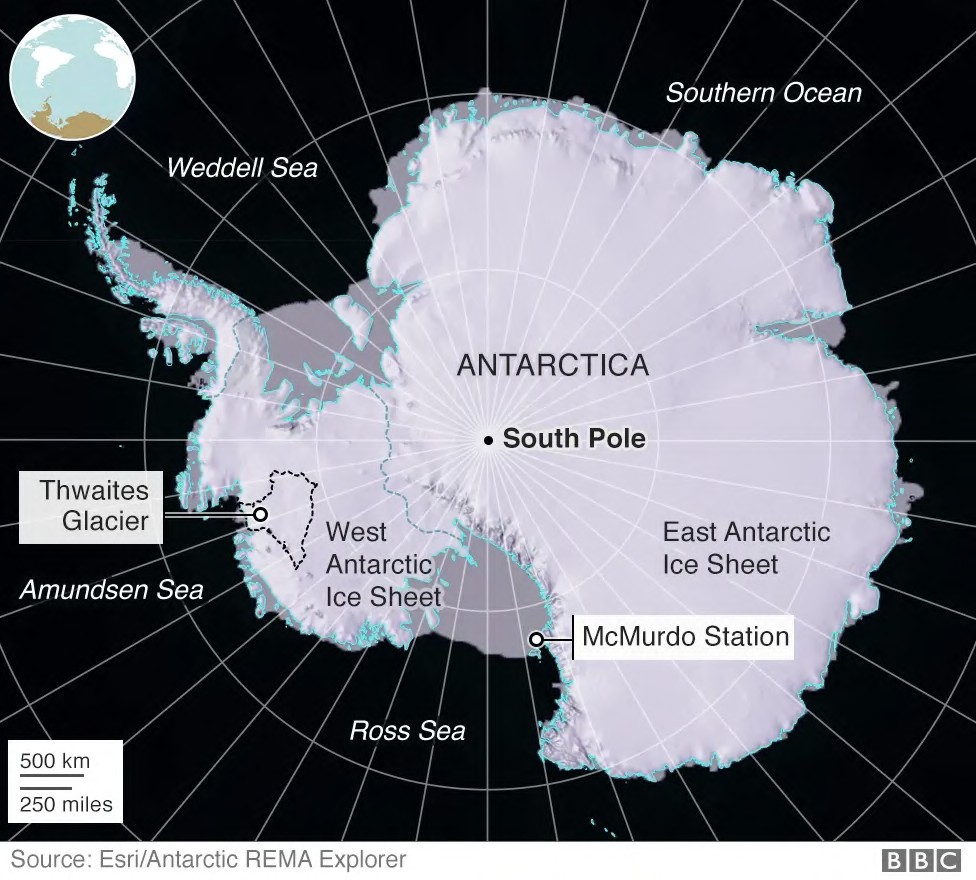
Ocean warming also interacts strongly with the cryosphere, particularly glaciers, ice shelves and ice sheets. In mountain regions such as the Himalayas, atmospheric warming contributes directly to glacier retreat. In polar regions, however, ocean warming can become especially important where relatively warm seawater comes into contact with the underside of floating ice shelves. An ice shelf is a floating extension of an ice sheet or glacier. Although melting of a floating ice shelf itself does not directly raise sea level to the same extent as melting land ice, the loss or weakening of an ice shelf can reduce its buttressing effect. This matters because ice shelves can act as barriers that slow the movement of land-based glaciers towards the ocean. Thwaites Glacier and Basal Melting The Thwaites Glacier in West Antarctica is often popularly called the “Doomsday Glacier” because of its potential contribution to long-term sea-level rise. One of the major concerns is basal melting. Relatively warm ocean water can enter beneath floating portions of the glacier and its ice shelf, bringing heat into contact with the underside of the ice. Melting from below can weaken the floating ice and reduce its stabilising influence.
 The process can therefore be understood as:
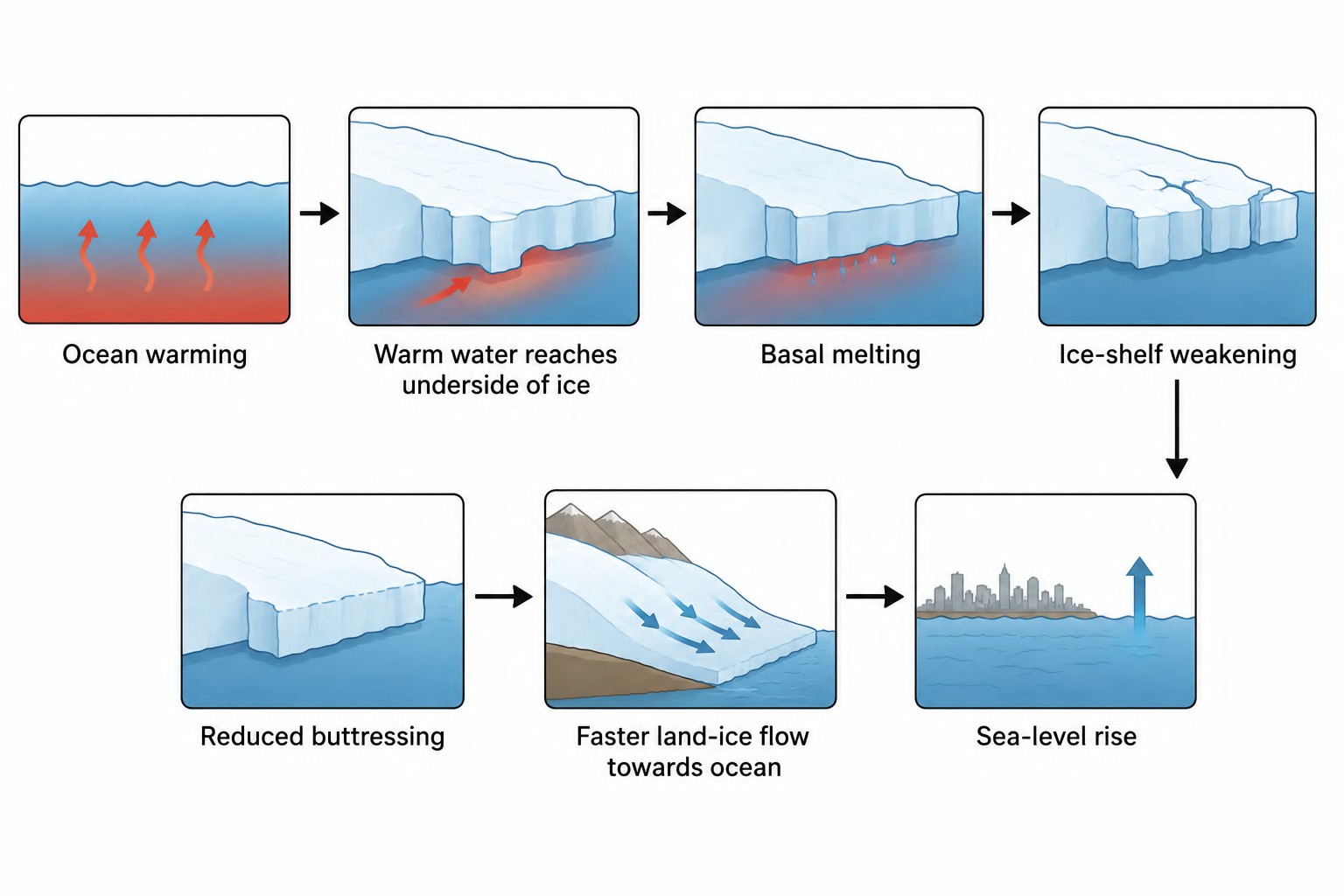 This illustrates an important principle: ocean warming can influence the cryosphere from below, not merely through warmer air temperatures above the ice.
Larsen Ice Shelf and Ice-Shelf Instability
The Larsen Ice Shelf on the Antarctic Peninsula provides another important example of ice-shelf change.
Ice shelves can experience both surface melting and processes acting from below, while structural weakening can eventually contribute to major ice-shelf disintegration. The Larsen Ice Shelf therefore demonstrates that changes in polar ice cannot be understood only through atmospheric temperature. The interaction between air temperature, ocean temperature, meltwater, ice dynamics and structural stability is equally important. 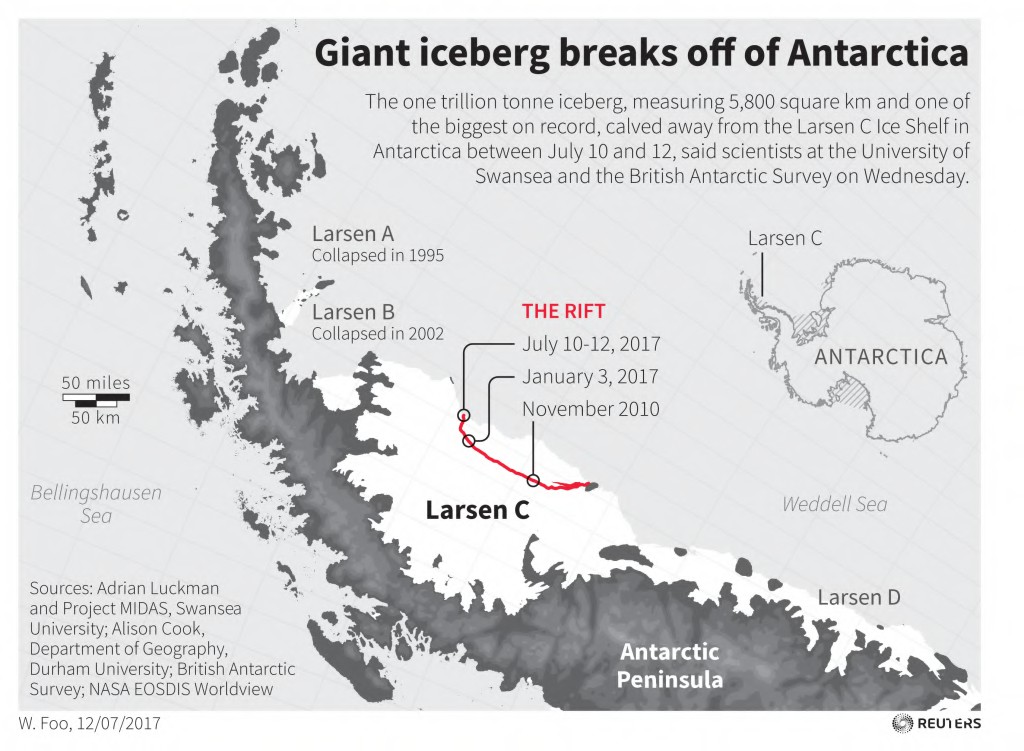 The broader geographical lesson is: The ocean can influence the stability of land-based ice indirectly by weakening the floating ice shelves that help restrain glacier flow.
3. Ocean Warming and Deoxygenation
The consequences of warming are not confined to sea level and ice. They also affect the chemical environment of the ocean. One important concern is ocean deoxygenation, or the reduction in the amount of dissolved oxygen available in seawater. 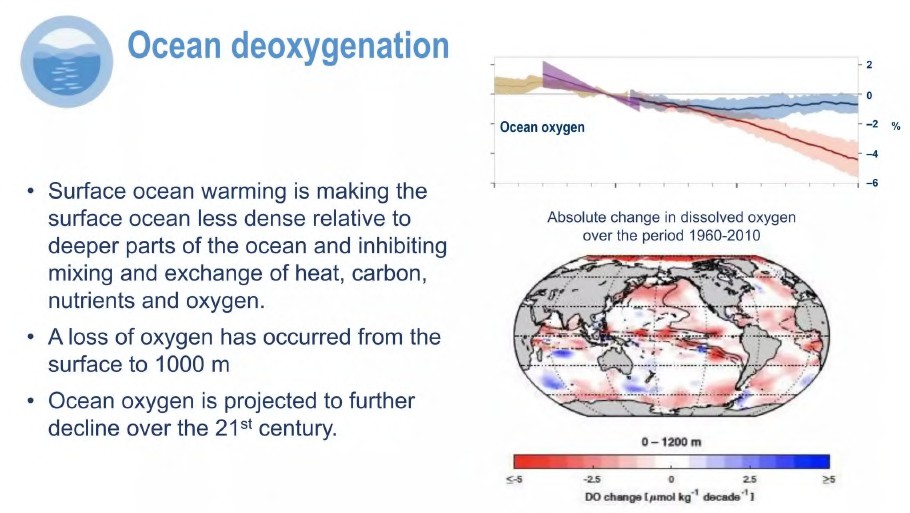 Warmer water generally has a lower capacity to hold dissolved oxygen than colder water. At the same time, stronger warming and stratification can reduce vertical mixing between surface and deeper waters. This can produce a combination of effects:
Warming → Lower oxygen solubility + Stronger stratification → Reduced oxygen replenishment at depth → Deoxygenation
Where oxygen becomes severely depleted, marine organisms can experience physiological stress or may be unable to survive. Persistent regions of very low oxygen can consequently develop into oxygen-depleted or hypoxic zones, reducing the suitability of the environment for many forms of marine life.
4. Formation of Marine “Biological Deserts”
Severe oxygen depletion can transform productive marine environments into areas with very limited biological activity. The term “biological desert” is useful as a conceptual description for regions where oxygen deficiency and other environmental stresses greatly reduce the abundance and diversity of marine organisms. The effect can propagate through the food web:
Warming → Deoxygenation → Marine organisms stressed or displaced → Reduced biodiversity → Disruption of food webs and fisheries
The impact is particularly important for organisms that cannot readily move away from deteriorating environmental conditions, as well as for coastal communities dependent on fisheries.
5. Coral Bleaching
Another major biological consequence of ocean warming is coral bleaching. Corals live in close association with microscopic photosynthetic organisms called zooxanthellae. These symbiotic organisms provide much of the energy that corals require. When seawater becomes abnormally warm for a prolonged period, corals experience thermal stress and may expel these symbiotic algae. The coral then loses much of its colour, producing the characteristic phenomenon known as coral bleaching.
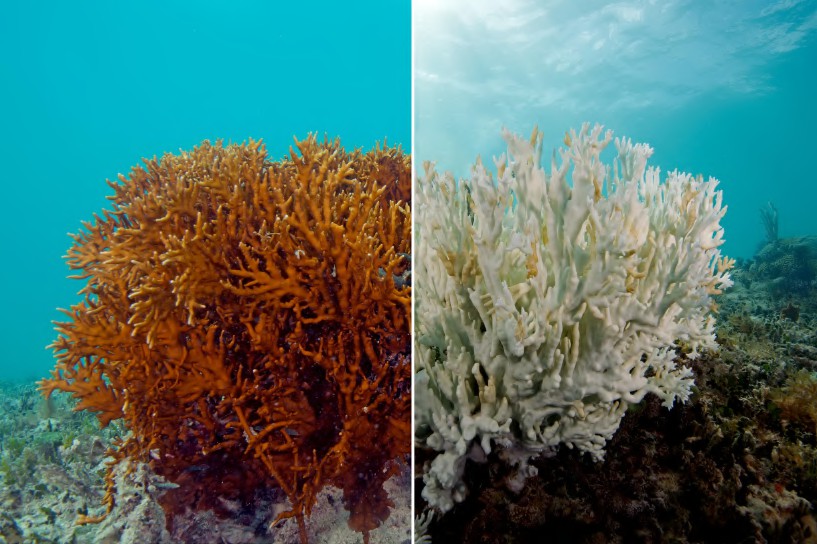
If stressful conditions persist, bleaching can lead to coral mortality. Coral reefs are often described as the “rainforests of the oceans” because of their exceptional biodiversity. The chain is therefore: Ocean warming → Thermal stress → Coral bleaching → Prolonged stress → Coral mortality → Reef ecosystem degradation The consequences extend beyond corals themselves because reefs provide habitat and breeding grounds for numerous marine species and support fisheries and coastal communities.
6. Changes in the Atlantic Meridional Overturning Circulation
Ocean warming can also influence large-scale ocean circulation. The Atlantic Meridional Overturning Circulation (AMOC) is a major system of ocean circulation involving the northward transport of warm surface waters and the southward movement of colder, denser deep waters. Its functioning depends partly on temperature and salinity differences, which influence seawater density. Climate change can alter these conditions through:
- Ocean warming
- Increased freshwater input from melting ice
- Changes in precipitation and evaporation
- Changes in ocean salinity and density
These changes can affect the formation and sinking of dense water in the North Atlantic and potentially weaken aspects of the overturning circulation. However, it is important not to state simplistically that the AMOC “is definitely slowing because of global warming” as though its present-day trend were fully established. Observational records are relatively short, and scientists continue to distinguish between long-term climate-model projections, historical reconstructions and direct observations. For examination purposes, the safer formulation is: Anthropogenic warming and increased freshwater input are expected to weaken the AMOC, with potentially significant consequences for regional and global climate.
7. Wider Atmospheric and Weather Consequences
Changes in ocean temperature and circulation can influence the atmosphere because the ocean continuously exchanges heat and moisture with the overlying air. Warmer oceans can increase evaporation and provide additional moisture and energy to the atmosphere. In tropical regions, sufficiently warm ocean surfaces can contribute to conditions favourable for tropical cyclone intensification, although cyclone behaviour depends on several factors including atmospheric instability, wind shear and ocean heat content.
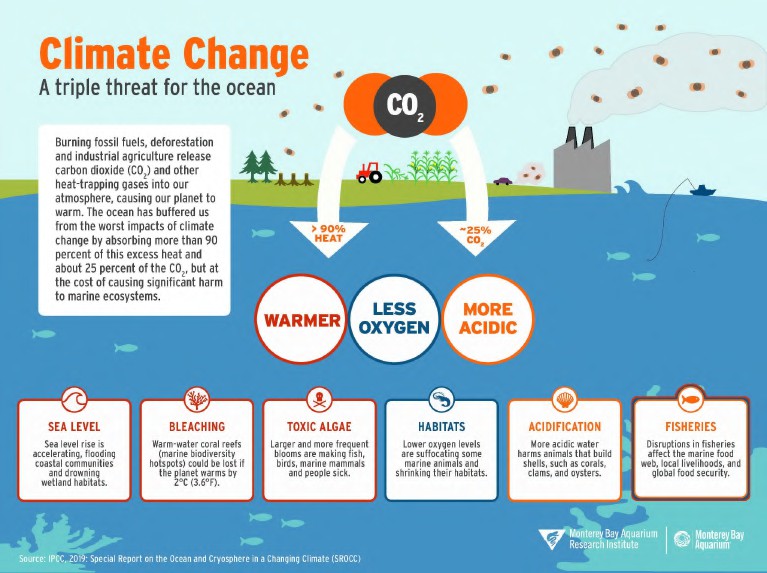
Similarly, changes in ocean–atmosphere interactions can influence El Niño–Southern Oscillation (ENSO), one of the most important coupled climate phenomena. It would, however, be incorrect to attribute every El Niño event or every extreme cyclone directly to global warming. Climate change can alter the background conditions and characteristics of these phenomena, while individual events continue to depend on natural variability. 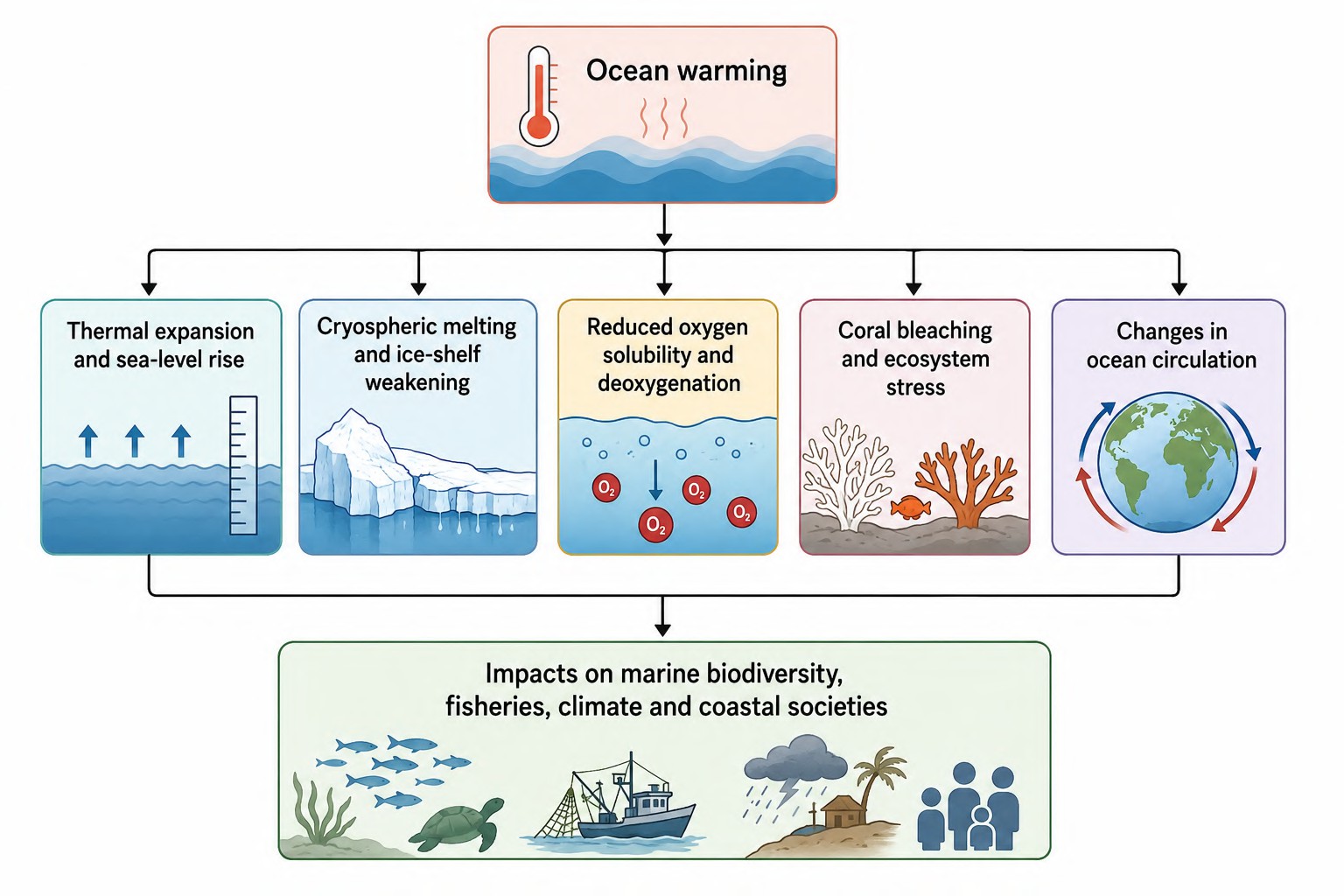 The significance of ocean warming therefore lies in the interconnections between physical, chemical and biological processes. Ocean temperature influences the volume of seawater, the stability of ice, the availability of oxygen, the health of ecosystems and the movement of ocean water itself.
In case you still have doubts, contact us on 9773890604
Enrol in Geography Optional by Shabbir Sir: Here
Enrol in One-on-One Personalised Mentorship: Here
Enrol in GS Mentorship Program: Here
Enrol In GS Mains Mentorship Program: Here
Explore One Integrated Platform for UPSC Prep: Yooki
Visit our YouTube Channel: Here