The drain of wealth theory refers to the ongoing transfer of national wealth from India to England without sufficient economic, commercial, or material benefits in return for India
Commercialization of agriculture during British rule in India refers to the shift in agricultural practices where farming was driven by commercial considerations rather than local consumption.
The economic exploitation of India by the British colonial rulers unfolded through distinct phases, each marked by policies and practices that significantly shaped the trajectory of the nation's economic history.
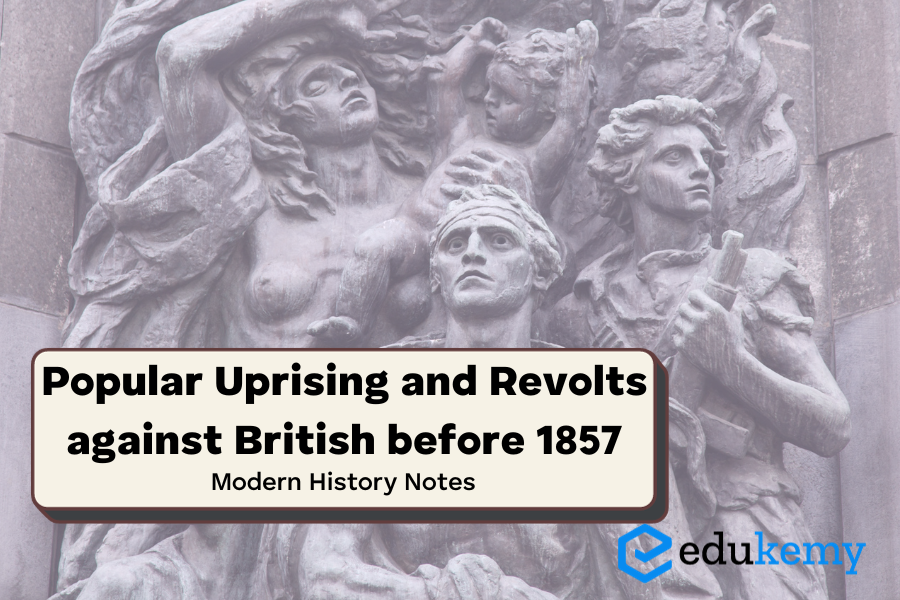
Popular uprisings and revolts against British colonial rule in India before the pivotal year of 1857 played a significant role in shaping the subcontinent's long and complex struggle for independence.
Literary works form an integral part of the tapestry of human history, providing invaluable insights into the cultural, social, and political nuances of bygone eras.
Tribal revolts, also known as indigenous uprisings, have been a recurring and significant feature of human history, often serving as a manifestation of the struggle between traditional ways of life and the forces of modernization and colonialism.