
Contents
Foundational Key Terms of Geopolitics
Before examining classical geopolitical theories, it is essential to establish three foundational concepts: Geopolitics, Strategic Interest and Effective Power. Together, they explain how geographical location creates opportunities and constraints, strategic interests determine what states seek to protect, and effective power determines what they can actually accomplish. Geographical Position → Strategic Interest → Effective Power → Geopolitical Influence
Geopolitics: Geography and Statecraft
Geopolitics examines the relationship between geographical space and political power, particularly how location, territory, resources, physical barriers and access routes influence the strategic behaviour of states. Geography provides the structural setting within which foreign policy operates. A state’s location can influence its exposure to neighbours, access to seas and resources, vulnerability to invasion, and importance within regional or global trade networks. However, geography is not destiny; economic capacity, institutions, technology, diplomacy and political choices determine how geographical advantages are converted into strategic influence.
Geographic Location as Strategic Context
A landlocked state faces different strategic constraints from a maritime state because access to international trade may depend upon neighbouring countries and transit corridors. Similarly, a state located between major powers can acquire strategic importance because its territory becomes part of the security calculations of those powers.
Nepal: The Buffer-State Concept
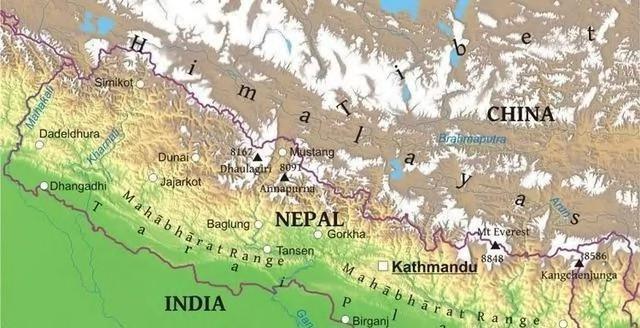
Nepal illustrates the geographical significance of a buffer state. Located between India and China, Nepal occupies a strategically sensitive position between two major powers. A buffer state can reduce the possibility of direct territorial contact between competing powers, although the relationship is not mechanically determined by geography. Its strategic importance can increase when surrounding powers have competing security, economic or diplomatic interests.
Thus: Strategic Location → External Interest → Diplomatic Leverage
Egypt: Maritime Chokepoint and Strategic Location
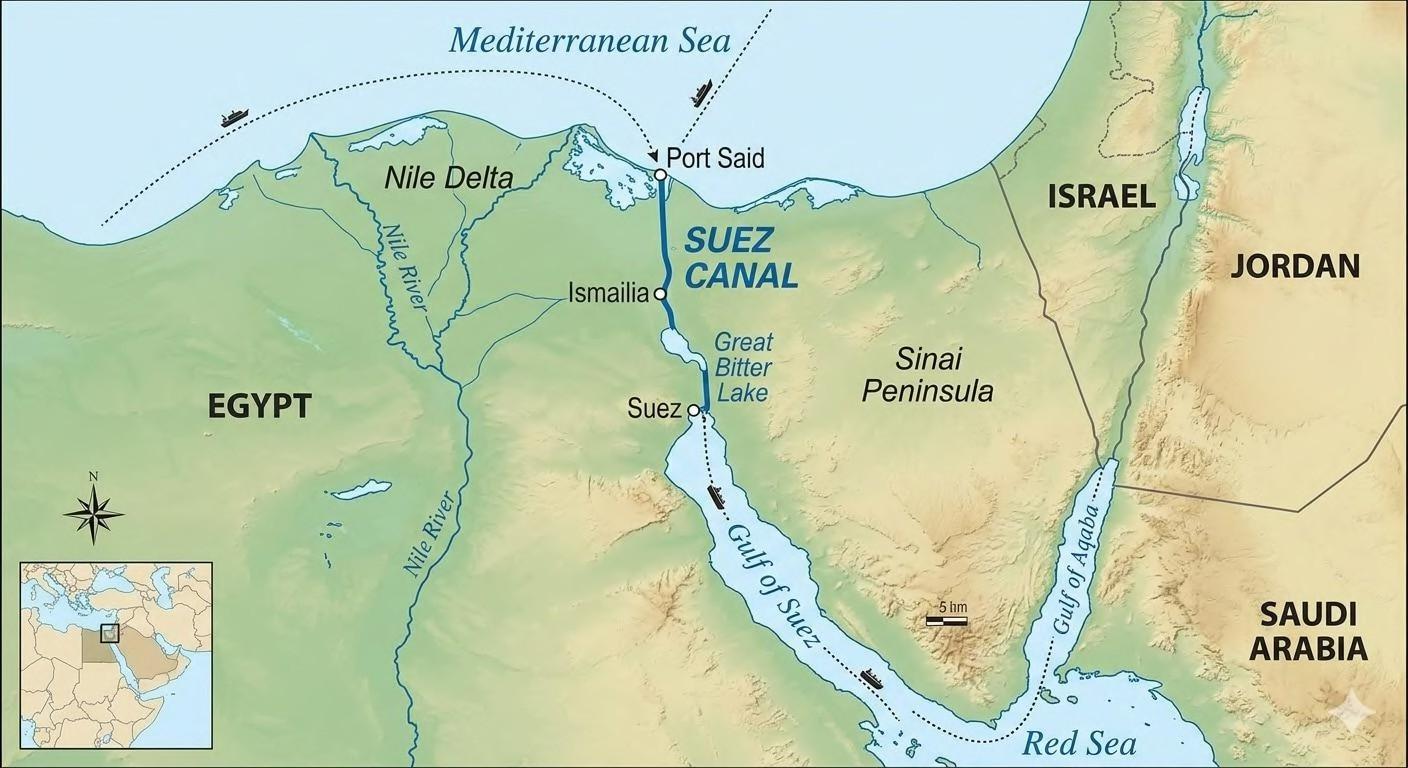
Egypt demonstrates another dimension of geopolitical significance. Much of the country’s territory is desert, while population and economic activity are heavily concentrated along the Nile Valley and Delta. Yet Egypt possesses an exceptionally important maritime location through the Suez Canal, connecting the Mediterranean Sea with the Red Sea. The canal provides a shorter maritime route between the European and Asian trading systems than the alternative around the Cape of Good Hope. Consequently, Egypt’s geopolitical significance derives not simply from its territory or resources, but from its position astride a major global transportation corridor.
These examples demonstrate that geopolitical importance can arise from different geographical conditions: Nepal → Strategic position between major powers Egypt → Control and location of a global maritime corridor Therefore, geography establishes the strategic context, but the conversion of geographical position into geopolitical influence depends upon state capacity, diplomacy, infrastructure, economic strength and international relationships.
Strategic Interest: What a State Seeks to Protect
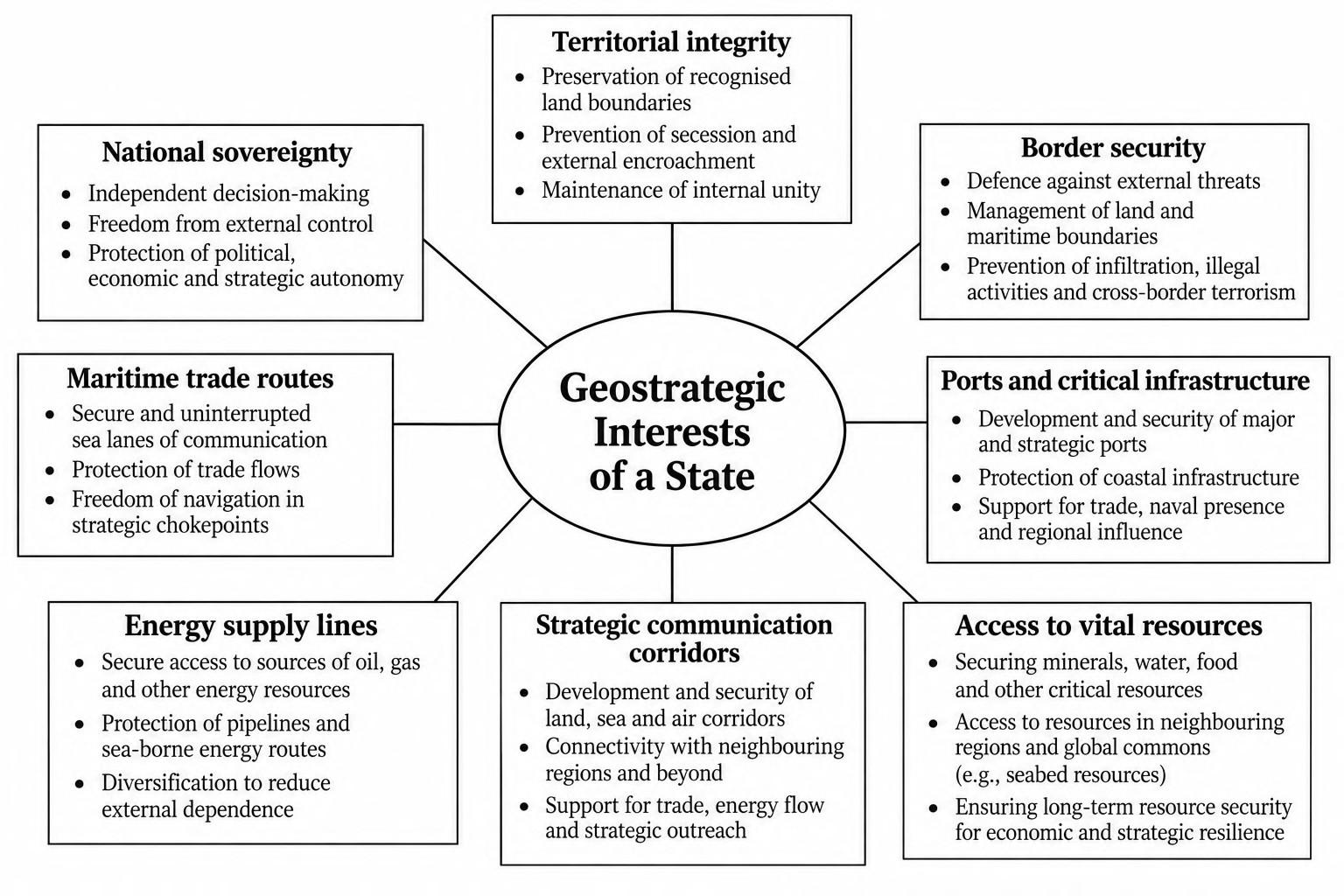
Strategic interest refers to the vital interests that a state considers necessary for protecting its sovereignty, territorial integrity, security and long-term national objectives. These interests extend beyond conventional territorial defence and can include:
- Territorial integrity
- National sovereignty
- Border security
- Maritime trade routes
- Ports and critical infrastructure
- Energy supply lines
- Strategic communication corridors
- Access to vital resources
Strategic Interest in the Indian Ocean
The Indian Ocean illustrates how geographical space can become a strategic interest because of its maritime routes, energy flows and connections between West Asia, Africa, South Asia and Southeast Asia.
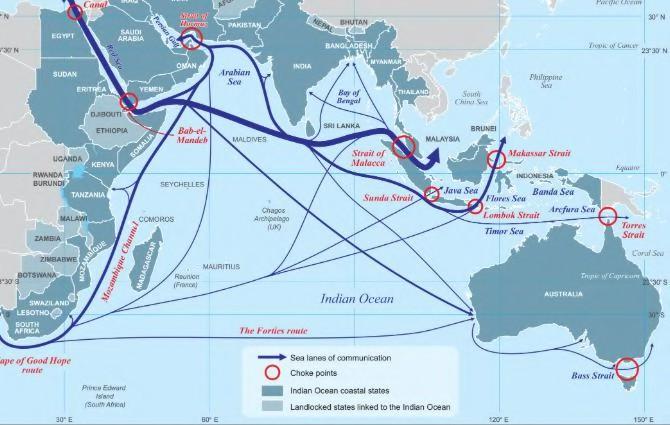
For India, the security of maritime routes is particularly important because substantial quantities of energy and merchandise trade move through the Indian Ocean region. Consequently, maintaining secure sea lanes, maritime surveillance and reliable access to ports becomes part of broader economic and national security. The key geographical concept is therefore: Strategic Interest = Protection of critical spaces, resources and flows essential to state security.
Effective Power: From Resources to Capability
Possessing resources does not automatically produce geopolitical influence. Effective power refers to the ability of a state to convert available resources and capabilities into operational outcomes. This distinction is crucial because nominal capability and usable capability are not identical. A state may possess a large military inventory, but its actual effectiveness depends upon: Technology + Training + Logistics + Accessibility + Command + Maintenance + Strategic Deployment. 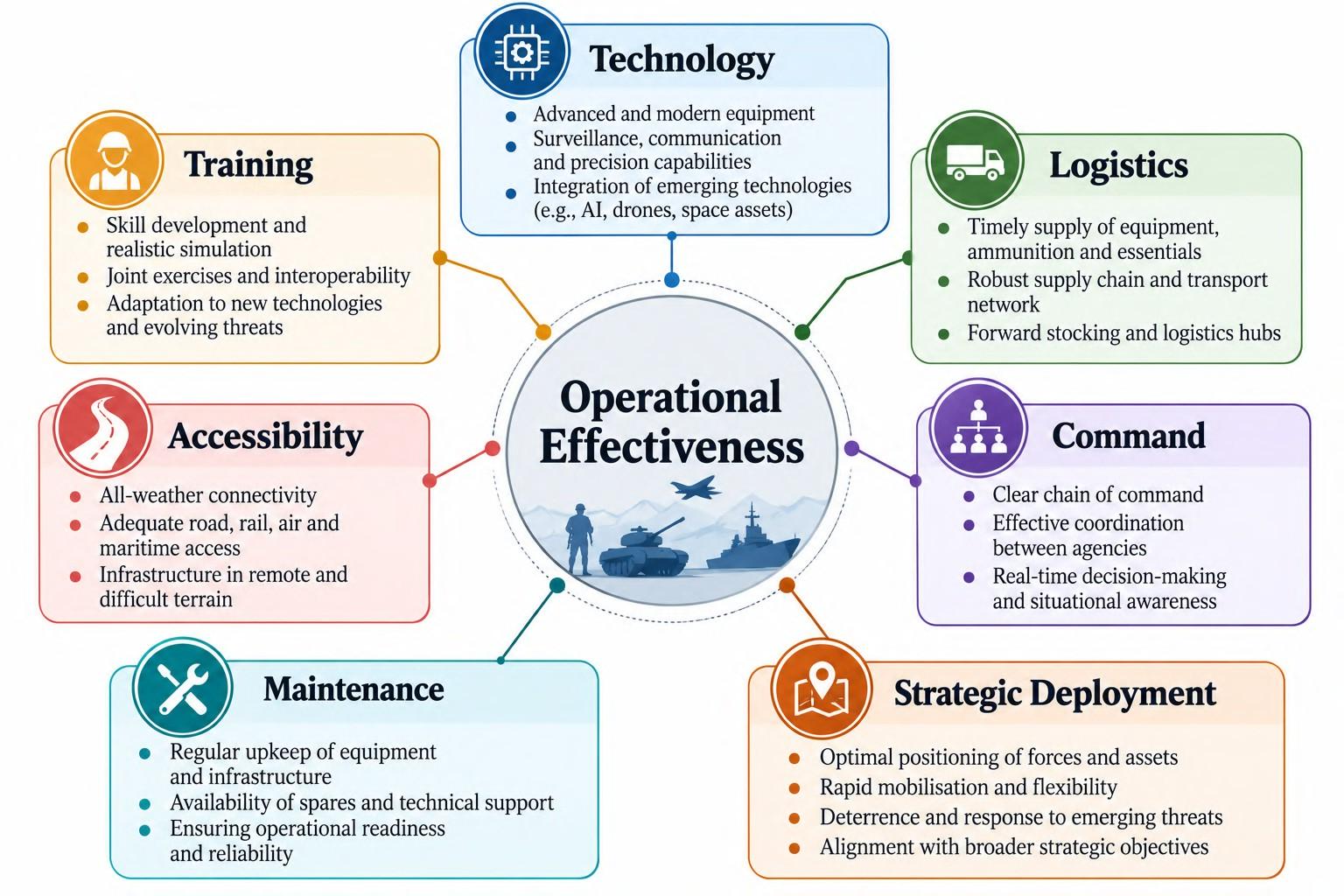
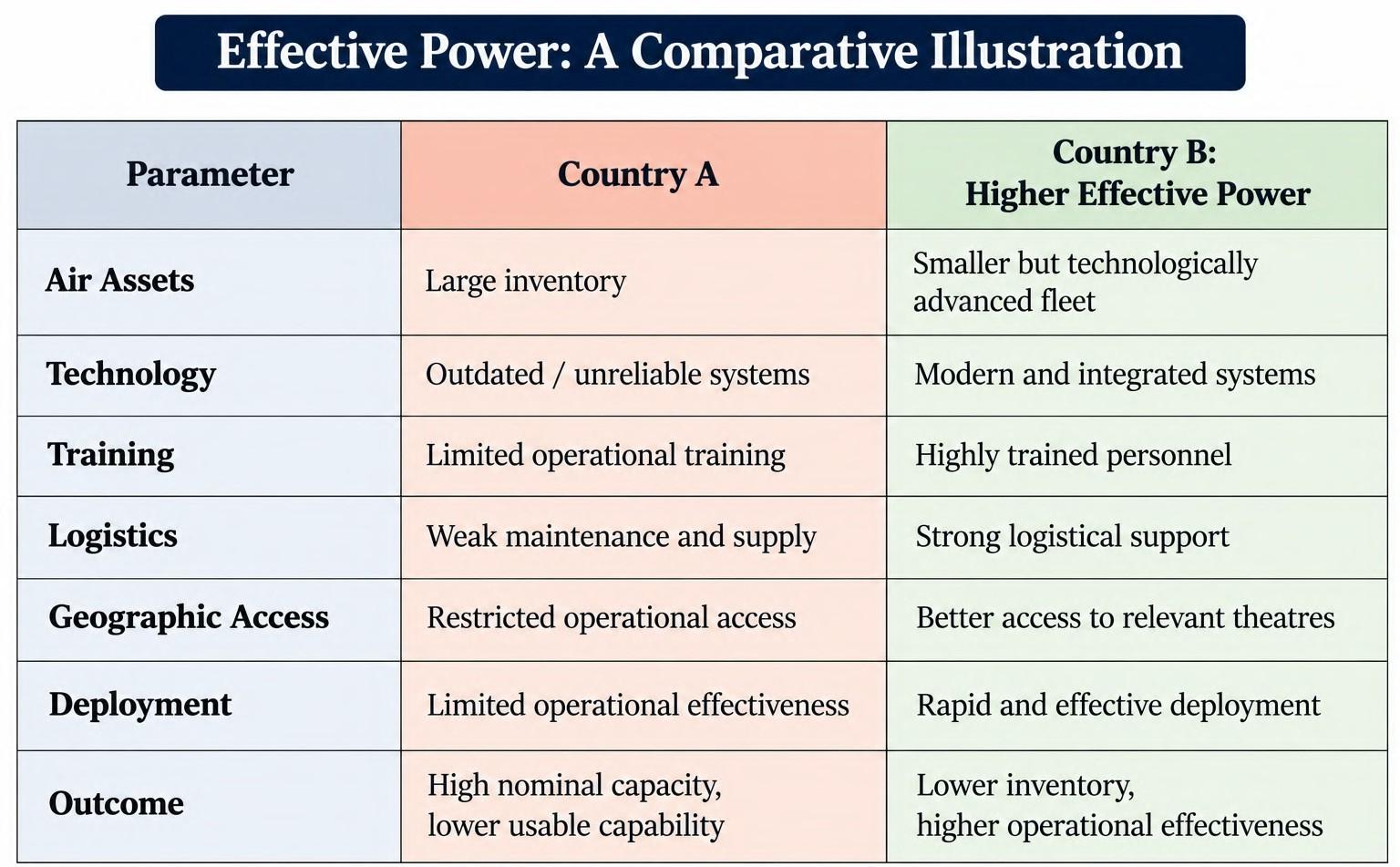
The important distinction is therefore: Resources ≠ Power. Rather: Resources + Capacity to Mobilise + Technology + Institutions + Accessibility = Effective Power
Geography and Effective Power
Geography can either enhance or constrain the conversion of resources into power. Mountain barriers, narrow corridors, maritime distance, chokepoints and hostile surroundings can affect the movement and deployment of military or economic capabilities. At the same time, diplomacy can alter these geographical constraints. Access agreements, alliances, trade relationships, logistical partnerships and diplomatic channels can expand the operational space available to a state. Thus, effective power is not purely military. It also depends upon the wider strategic environment.
In case you still have your doubts, contact us on 9773890604
Enrol in Geography Optional by Shabbir Sir: Here
Enrol in One-on-One Personalised Mentorship: Here
Enrol in GS Mentorship Program: Here
Enrol In GS Mains Mentorship Program: Here
Explore One Integrated Platform for UPSC Prep: Yooki
Visit our YouTube Channel: here