While not many UPSC exam questions have focused on the period, it’s still crucial to understand the chronology and significant events of the Mahajanpadas era. In this brief overview, we’ll highlight important points that will help you understand the coming events and dynasties.
- Around 600 BCE, the period known as the Mahajanpadas marked the second urbanization phase in India’s history (the first being the IVC). This era saw a shift in the center of polity and economy from the northwest to the eastern states, particularly Bihar. With the use of iron tools and the growth of urban settlements, large territories known as Mahajanapadas emerged. According to the Buddhist text Anguttara Nikaya, there were 16 such Mahajanapadas at the time.
Contents
- 1 Some of the Mahajanapada are (arranged east to west)
- 2 Types of Government
- 3 Difference between Kingdoms and Gana-Sangha
- 4 Rise of the Magadha Empire
- 5 Various Kings in the Magadha Empire
- 6 Magadha’s Success: Reasons and Factors
- 7 Different Aspects of the Age of Mahajanapads
- 8 Persian Invasion in India
- 9 FAQs:
- 9.1 Q1: What does the term “Mahajanapadas” mean?
- 9.2 Q2: What is the significance of Mahajanapadas in Indian history?
- 9.3 Q3: How many Mahajanapadas were there in ancient India?
- 9.4 Q4: Can you list the names of all the Mahajanapadas?
- 9.5 Q5: What aspects of Mahajanapadas should I focus on for UPSC preparation?
- 9.6 Q6: What is the Hindi meaning of “Mahajanapadas”?
- 9.7 Q7: Who were some of the famous kings associated with Mahajanapadas?
- 9.8 Q8: What were the contributions of these kings to their respective Mahajanapadas?
- 10 In case you still have your doubts, contact us on 9811333901.
Some of the Mahajanapada are (arranged east to west)
| Mahajanapadas | Capital | Unique Aspect |
| Anga (South of Ganga, Bihar) | Champa | Important trade center for traders moving to South-East Asia (Suvarnabhumi). |
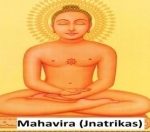 Vajji (North Bihar) | Vaishali | It was Republic state with many clans e.g. Lichchavis (capital Vaishali), Videhans (capital Mithila), and Jnatrikas (Mahavira belonged to this clan). |
| Malla | Kushinagar and Pava | It was also a Republic state. Buddha took his last meal at Pava and entered Mahaparinirvana at Kushinagar. |
| Kashi (Eastern UP) | Varanashi | |
| Magadha (Bihar) | Rajgir | Haryanka Dynasty. |
| Koshala (Ayodhya, Eastern UP) | Shravasti | Its King was Prasenjit (a contemporary of Buddha)It included tribal Republic of Shakyas ( capital Kapilvastu) (Birth of Buddha at Lumbini). |
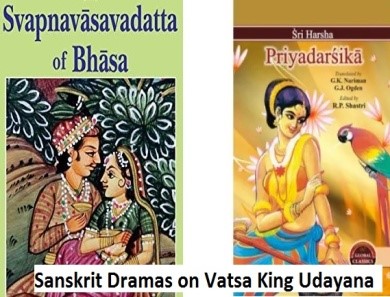 | Kaushambi (confluence of river Ganga and Yamuna, modern Allahabad) | Its King Udayana is the central character in three Sanskrit dramas: Svapnavasavadatta (by Bhasa) (romantic narratives about Udayana and Vasavadatta, the daughter of the ruler of Avanti). Ratnavalli (by Harsha) (story of beautiful princess. named Ratnavali, and king Udayana). Priyadarshika (also by Harsha). |
| Chetiya or Cheti (Central India) | Shuktimati | Its king was Shishupala (also mentioned in Mahabharata). |
| Panchala (Western UP) | Ahichchhatra (modern Bareilly) | |
| Kuru (Western UP) | Indraprastha | Mahabharata tells the story of the conflict in the Kuru clan. |
| Shurasena (Western UP) | Mathura | Its king Avantipura was the disciple of Buddha. |
| Matsya (Eastern Rajasthan) | Vijayanagara | |
| Avanti (Central Malwa)- Divided by Vindhya Range | North Avanti: UjjainSouth Avanti: Mahismati | |
| Assaka (situated on the bank of Godavari River) | Potali (modern Nizamabad, Telangana). | Only Mahajanapada lying south of Vindhyas. |
| Gandhara (North-west Pakistan) | Taxila | The Behistun Inscription of the Achaemenid Emperor Darius mentions that Gandhara being conquered by the Persians in 2nd half of the 6th Century BC. |
| Kamboja (North-west Pakistan) | Poonch (J&K) | It was situated on the Uttarapatha and was known for its excellent breed of horses and as remarkable horsemen. |
Types of Government
There were two types of Government- Monarchy (in Kingdoms) and Republics (or Gana-Sangha) E.g. Vajji (Confederation of many clans); Shakya, and Malla (were made up of single clans) were Republics.
Difference between Kingdoms and Gana-Sangha
| Features | Kingdoms | Gana-Sangha (Republic) |
| Government | Centralized and Hereditary. | Decentralized and was not hereditary. Authority was vested in a council consisting of the chief of the clan. |
| Location | Most of them based in the foothills of the Himalayas. | Most of them are located in the Great alluvial plains of Ganga and its tributaries. |
| Decision-making | Through debate, discussion, and voting in the assembly called Santhagara. | Through King, who was advised by Mantri-Parishad (ministers). |
| Views | Tolerance towards unorthodox views e.g. Mahavira and Buddha views were contrary to the Vedic system. | The Brahmanical system did not tolerate other views. |
| Loyalties | Clan loyalty. | Caste and King loyalty. |
Rise of the Magadha Empire

There were constant conflicts between various Mahajanapadas and ultimately Magadha emerged as the largest Empire. The 1st Dynasty to rule Magadha was Haryanka (founded by Bimbisara).

Various Kings in the Magadha Empire
| King | Important Events |
| Bimbisara (Founder; Capital: Rajagriha) | He was the contemporary of Buddha and Mahavira. He followed the three-pronged policy. Matrimonial Alliances: He married the princess of the Kosala, Lichchavi, and the Madra clans. Friendship with strong rulers: e.g. He sent his royal physician ‘Jivika’ to Avanti King. Conquest of weak neighbors: He conquered Anga (Champa was an important trading center). |
| Ajatshatru | Similar to Bimbisara, he followed expansionist policy using modern machines e.g. he used a war engine to throw stones like catapults ( Mahashilakantaka) and a Chariot with mace (Rathamusala). He conquered Varanasi and Vaishali into his kingdom. His meeting with Buddha is depicted in sculptures of Barhut. He arranged 1st Buddhist Council. |
| Udayin | He founded the new capital at Patliputra (on the confluence of River Ganga and Son ). The Haryanka dynasty started to deteriorate after him due to weak rule and Parricide (killing of parents and other relatives). |
| Shishunaga | Shishunaga was an Amatya (minister) during the Magadha Period. He became king and founded the Shishunaga dynasty. He defeated Avanti and made it part of Magadha, thus bringing an end to 100 years of rivalry between Magadha and Avanti. |
| Kalasoka | 2nd Buddhist council was held at Vaishali during his reign. He was killed by Mahapadma Nanda (founder of the Nanda dynasty). |
| Mahapadma Nanda | He founded the 1st non-Kshatriya dynasty as several sources say he belonged to a lower caste. He is known as an Empire builder (Ekarat): acquired Kalinga and Kosala to Magadha (Hathigumpha inscription). |
| Dhanananda | He was the last king and became unpopular due to his oppressive taxes and exploitation. Chandragupta Maurya took advantage of such discontent and founded the Maurya dynasty. During his reign, Alexander invaded India but did not cross the Beas River due to the powerful army of Nandas. |

Magadha’s Success: Reasons and Factors
- Magadha’s success can be attributed to several factors, including its advantageous geographical position. The region’s proximity to rich iron deposits allowed the Magadhan army to possess high-quality weapons. Additionally, Magadha’s capital, Rajagriha, was surrounded by five hills, providing natural fortification, while its city of Patliputra, located at the confluence of Rivers Ganga and Son, created a route for trade and commerce.
- Magadha’s success in agriculture can also be attributed to its location in the fertile Ganga plains, which allowed for the feeding of its standing army. Furthermore, Magadha’s use of elephants on a large scale proved to be an advantage, as elephants were better suited than horses for storming fortresses and marching over areas without roads.
- Magadha also had good leaders, such as Bimbisara, Ajatashatru, and Mahapadma Nanda. Finally, the Magadhan society’s enthusiasm for expansion, fueled by their support for unorthodox religions, led to a quest for expansion into other areas.
Different Aspects of the Age of Mahajanapads
| Features | Descriptions |
| The emergence of new types of Towns | Mahanagara: big city e.g. Kashi, Kaushambi, Shravasti, etc. Rajdhani: Capital city e.g. Rajagriha, Patliputra, etc. Pura (Nagara): fortified town. Nigama: Market town. Nagarka: small town. |
| Three types of villages existed (as suggested in Vinay Pitaka) | Typical villages: consisted of mixed castes, and communities. Most of the villages were of this type. Suburban villages: These were Craft villages, Chariotmakers’ villages, Carpenter’s village (Vaddhaki-grama). Border Villages (Aramika-grama): situated on the periphery of the countryside. Brahmadeyas: granted to Brahmanas. |
| The emergence of Guilds (association of craftsmen or merchants) | Artisans and merchants organized themselves into their respective guilds. Sethi was a high-level businessman. Vessas (or merchant streets): where artisans and merchants live in fixed localities. |
| Trade routes | Uttarapatha (Taxila to Rajgriha and later extended to Tamrilipti) and Dakshinapatha. |
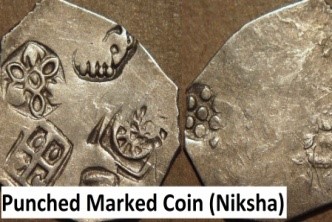 Use of Money | An early series of punch-marked coins called Nishka and Satamana were generally made up of Silver, though a few copper coins were also there. |
| Taxes | Bali (voluntary payment) became compulsory and special officers called Bali-adhyaksha were appointed to collect it. One-sixth of the produce was paid by peasants as tax. |
| Agriculture | Agrarian Expansion: aided by Iron ploughshare and fertile plains. Crops: Rice (paddy transplantation was widely practiced), Barley, Pulses, Millets, Cotton, and Sugarcane. |
| Administrative System | Parishad (advisory council of the King consisting exclusively of Brahmanas): Previous assemblies such as Sabha and Samiti almost disappeared and was replaced by Parishads. Officials: Kammikas: Custom officials Shulk-adhyaksha: Toll officials Rajabhatas: deputed to safeguard the lives and property of travelers. |
| Legal and Judicial System | Tribal laws were replaced by Civil and Criminal law based on Varna distinctions. Crime committed by Shudras were punished severely, while crimes committed by Brahmanas were treated lightly. Criminal laws were based on retributions (‘revenge’ i.e. ‘an eye for an eye). |
| Kinship | People had strong Kinship ties e.g. Even though Monks were to renounce family ties, monastic rules were bent to make allowances for them to continue their kinship ties. |
| Condition of Women | There was Subordination of women through Patriarchal control and an endogamous caste system. Ideal code of conduct and expected roles were defined for women. |
| Pottery | Pottery Shifted from Painted Grey Ware (PGW) culture to North Black Polished Ware.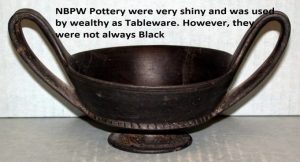 |
Persian Invasion in India
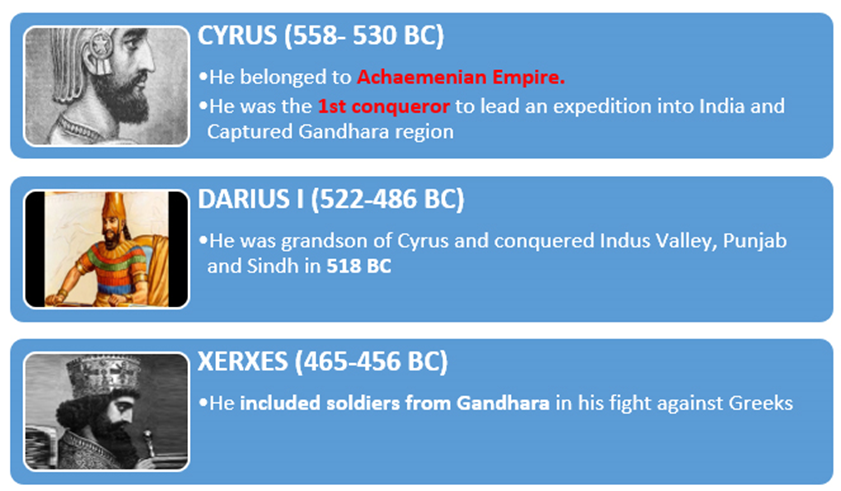
In ancient India, the three Mahajanapadas of Kamboja, Madra, and Gandhara in the north-west continuously fought with each other due to the absence of a central authority like Magadha in the east. Taking advantage of this political instability, the Persian Empire penetrated northwestern India in the 6th century. All Indian tribes west of the Indus River submitted to the Persian Empire and paid tribute.
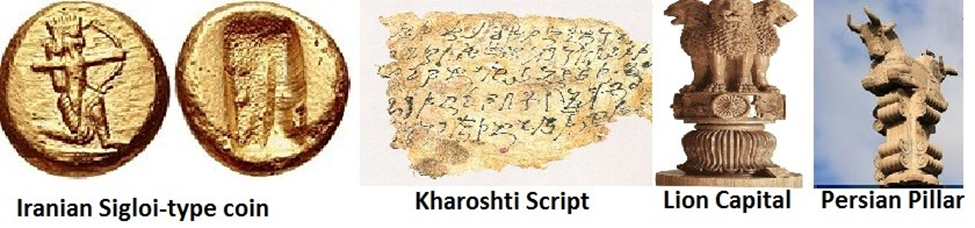
The Persian invasion had several impacts on India, including providing an impetus to Indo-Persian trade and commerce.
Persian Sigloi-type coins were copied in India, and the use of Kharoshti script, a form of Persian writing, became popular in India’s northwest. Some of Ashoka’s edicts were also written in Kharoshti script, and the Persian invasion influenced Mauryan art, such as the monolithic pillars of Ashoka and sculptures carved on them, especially the bell-shaped capitals and preambles of Ashoka’s Edict, which show a lot of Iranian influence.
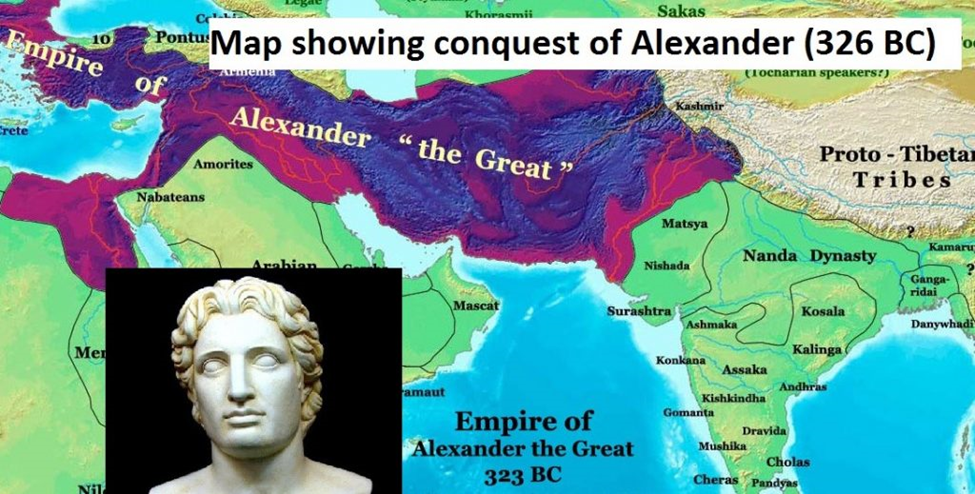
Later, the Macedonian (Greek) invasion under Alexander the Great in 326 BC captured most of northwest India, except for the kingdom of Porus, who fought the battle of Hydaspas near the Jhelum River. Alexander’s armies were exhausted from battles and didn’t cross the River Beas, and he died on his way back to Greece in Babylonia in 323 BC.
Alexander’s invasion had several impacts on India, such as establishing direct contact between India and Greece, leading to Greek merchants and craftsmen trading with India. It also established the Gandhara school of arts and exposed India to invasion from the West by opening four lines of communication (three routes by land and one by sea). Additionally, Alexander’s invasion aided the Mauryan Empire’s expansion to the northwest by destroying smaller states and unifying North India under Chandragupta Maurya.
Although not many MCQs have been asked about this topic in the UPSC exam, the next chapter on religious reforms is crucial for UPSC Prelims and Mains.

FAQs:
Q1: What does the term “Mahajanapadas” mean?
A: “Mahajanapadas” is a Sanskrit term that refers to the ancient, powerful and prominent republics or kingdoms in ancient India.
Q2: What is the significance of Mahajanapadas in Indian history?
A: Mahajanapadas played a crucial role in shaping the political and social landscape of ancient India and were precursors to the formation of larger empires.
Q3: How many Mahajanapadas were there in ancient India?
A: The exact number of Mahajanapadas is not fixed, but there were usually sixteen prominent ones, including Magadha, Kosala, Vatsa, and Avanti.
Q4: Can you list the names of all the Mahajanapadas?
A: Some of the notable Mahajanapadas include Magadha, Kosala, Vatsa, Avanti, Kashi, and Malla, among others.
Q5: What aspects of Mahajanapadas should I focus on for UPSC preparation?
A: You should focus on their locations, rulers, socio-political structure, and their historical significance in the context of ancient Indian history.
Q6: What is the Hindi meaning of “Mahajanapadas”?
A: In Hindi, “Mahajanapadas” translates to “महाजनपद,” which literally means “great kingdoms” or “major republics.”
Q7: Who were some of the famous kings associated with Mahajanapadas?
A: Some notable kings from Mahajanapadas include Bimbisara of Magadha, Prasenajit of Kosala, Udayana of Vatsa, and Ajatashatru of Magadha.
Q8: What were the contributions of these kings to their respective Mahajanapadas?
A: These kings played significant roles in the expansion, administration, and development of their respective Mahajanapadas, contributing to their prominence in ancient India.
In case you still have your doubts, contact us on 9811333901.
For UPSC Prelims Resources, Click here
For Daily Updates and Study Material:
Join our Telegram Channel – Edukemy for IAS
- 1. Learn through Videos – here
- 2. Be Exam Ready by Practicing Daily MCQs – here
- 3. Daily Newsletter – Get all your Current Affairs Covered – here
- 4. Mains Answer Writing Practice – here